

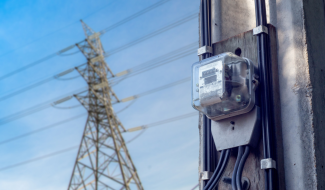
Growing interest in solar energy across India is encouraging homeowners to invest in rooftop systems that reduce their electricity bills and lower their carbon footprint. But beyond just generating solar power, it is equally important to understand how that power is measured and billed—because that’s what truly determines your savings.
A common assumption is that going solar means zero electricity bills. In reality, most rooftop solar systems in India are grid-connected, and unless you have a battery, excess electricity is not stored. It is either exported to the grid or consumed in real-time. Depending on the metering mechanism set by your distribution company (DISCOM), you may be credited or compensated for the solar energy you send back to the grid.
In India, there are three primary solar billing mechanisms, which we explain further:
- Net metering
- Gross metering
- Net billing
1. Net metering
With net metering, your solar system supplies power to your home first. When your system produces more electricity than you use, the surplus is sent to the grid. If your electricity needs exceed your solar production, such as during the night, you draw power from the grid.
A bi-directional meter records both the electricity you consume from the grid (import) and the electricity your solar system sends to the grid (export). At the end of the billing cycle, the net units—calculated as total electricity imported minus total electricity exported—are used to determine your bill.
Benefits:
- Reduces your electricity bill significantly by offsetting consumption with generation.
- Earns credits for excess power sent to the grid.
- Environment-friendly with minimal reliance on grid power.
Limitations:
- Credit policies vary by state, and not all DISCOMs offer 1:1 compensation for net exported units.
2. Gross metering
In gross metering, all solar power your system generates is exported to the grid. You do not use this directly for your home. Instead, you continue to purchase all your electricity from the grid, and for this, you are paid a fixed feed-in tariff set by the DISCOM.
In many Indian states, net metering is permitted only up to a specified sanctioned load, beyond which consumers are required to switch to gross metering, which is compensated at the feed-in tariff. A uni-directional export meter is used to track the total amount of solar electricity your system supplies to the grid.
Benefits:
- Guaranteed income for every unit of solar power that is generated.
- Suitable for institutions or commercial users looking to monetise their power generation or their available roof space rather than reduce consumption.
Limitations:
- No direct savings on your electricity bill because all generated power is sold, and you still pay for all energy consumption.
- Tariffs for export are usually lower than retail electricity rates.
3. Net billing
Net billing is a hybrid model where you use the generated solar power during the day, and the surplus is exported to the grid. But instead of receiving credits for these exported units (as in net metering), you are paid a fixed rate. Meanwhile, any electricity you consume from the grid is billed at regular rates.
Both export and import are accounted for separately, and your final bill =
(consumed units x standard retail tariff) - (exported units x feed-in tariff).
Benefits:
- Balances self-consumption and compensation—you use the power you generate during the day and get paid for the remaining units that are exported to the grid.
Limitations:
- Lower financial benefit than net metering, due to the mismatch between buying and selling rates.
- Tariffs vary by DISCOM, and export prices are often significantly lower than retail rates.
To see how this works in practice, let’s say your system, in a month:
- Exports: 1,000 units to the grid
- Imports: 1,200 units from the grid
Assuming:
- Grid rate or electricity import rate: ₹8/unit
- Export rate (gross/net billing): ₹3/unit
Here is a comparison of the three metering types showing the possible savings on electricity costs.
| Metering type | What you pay | What you earn | Final bill |
| Net metering | For 200 units (1,200–1,000) x ₹8 = ₹1,600 | - | ₹1,600 |
| Gross metering | For 1,200 units x ₹8 = ₹9,600 | 1,000 units x ₹3 = ₹3,000 | ₹6,600 |
| Net billing | For 1,200 units x ₹8 = ₹9,600 | 1,000 units x ₹3 = ₹3,000 | ₹6,600 |
Note: Import and export rates for all the three types of metering are fixed by the DISCOM and may vary for different regions. Some DISCOMs may provide better rate for exporting during peak hours in case of net billing.
But overall, it can be seen that net metering offers the best savings when available, since it offsets grid electricity 1:1.
A quick note on policies
The type of metering available depends on the DISCOM serving your area. To understand the local policies and relevant metering options, consult your solar installer.
Make the most of your solar investment
Understanding how your solar system is billed is just as important as choosing the right solar panels or solar inverter. Whether it’s saving more, earning from exports, or adapting to local policy, the metering type plays a big role in your return on investment.
And with smart solar technologies like Enphase, homeowners can track generation and consumption in real-time, optimise battery usage, and get the most out of whichever metering policy their DISCOM follows.
