If you’ve started comparing solar quotes, you’ve probably noticed something confusing: no two proposals look the same. One quote shows a 9 kW system. Another shows 11 kW. The prices differ by thousands. Production estimates don’t match. Savings projections stretch 25 years into the future.
So how do you know which solar quote is actually right for your home?
A solar quote is a long-term decision that affects your home, finances, and energy security. The key is understanding what actually matters inside the proposal.
Here are 10 things to check before signing a solar installation agreement.

System size: does it match your annual energy usage?
Every solar quote lists a system size in kilowatts (kW). But system size alone doesn’t tell the full story. What matters more is whether that size makes sense for your actual electricity use.
A properly designed residential solar system should reflect:
- Your past 12 months of electricity usage (kWh)
- Seasonal consumption trends
- Planned energy changes (EV charging, electrification upgrades)
- Your local utility’s net metering structure
Oversized systems may increase upfront cost unnecessarily. Undersized systems may limit long-term savings. The goal is alignment with your energy needs.
When comparing solar quotes, ask:
What percentage of my annual electricity usage will this system offset?
Look for a clear explanation tied to your utility bills, not a generic estimate.
Annual solar production estimate: how accurate is it?
Solar proposals include projected annual energy production in kilowatt-hours (kWh), which directly impacts your long-term savings.
When reviewing a quote, confirm that the estimate accounts for shading, nearby obstructions, local climate data, and panel degradation over time. Tools like Solargraf are commonly used to model shading and improve accuracy.
For example, a 6 kW system on a shaded roof can produce less energy than a 5 kW system in full sun.
Accurate production estimates lead to more realistic financial projections.
Ask your installer:
How was shading analyzed in this design?
You should hear about modeling tools or shade measurements, not just satellite imagery.
Solar panel brand and model: what’s actually being installed?
Not all solar panels are the same, and your quote should clearly specify the exact equipment being used.
Look for:
- Manufacturer: Indicates reliability, track record, and long-term financial stability
- Model number: Defines specifications and warranty details
- Wattage: Determines how much power each panel can produce
- Efficiency: Higher efficiency helps when roof space is limited
- Product warranty: Covers manufacturing defects
- Performance warranty: Guarantees output over time
Avoid vague terms like “premium panels.” Since solar panels are expected to last 25 years or more, transparency and manufacturer longevity are essential.
Ask your installer:
Can you confirm the exact panel model, warranty terms, and manufacturer track record?
Expect documentation or a spec sheet. If roof space is limited, you can also ask how panel efficiency impacts your overall system design.
Inverter type: how your system converts energy
The inverter converts DC electricity from your panels into usable AC power. It also affects performance, expandability, and monitoring visibility. One common residential architecture in the U.S. is microinverter-based systems.
With microinverters:
- Each panel performs individually
- Shading on one panel doesn’t affect others
- Panel-level monitoring is available
- Future expansion is simpler
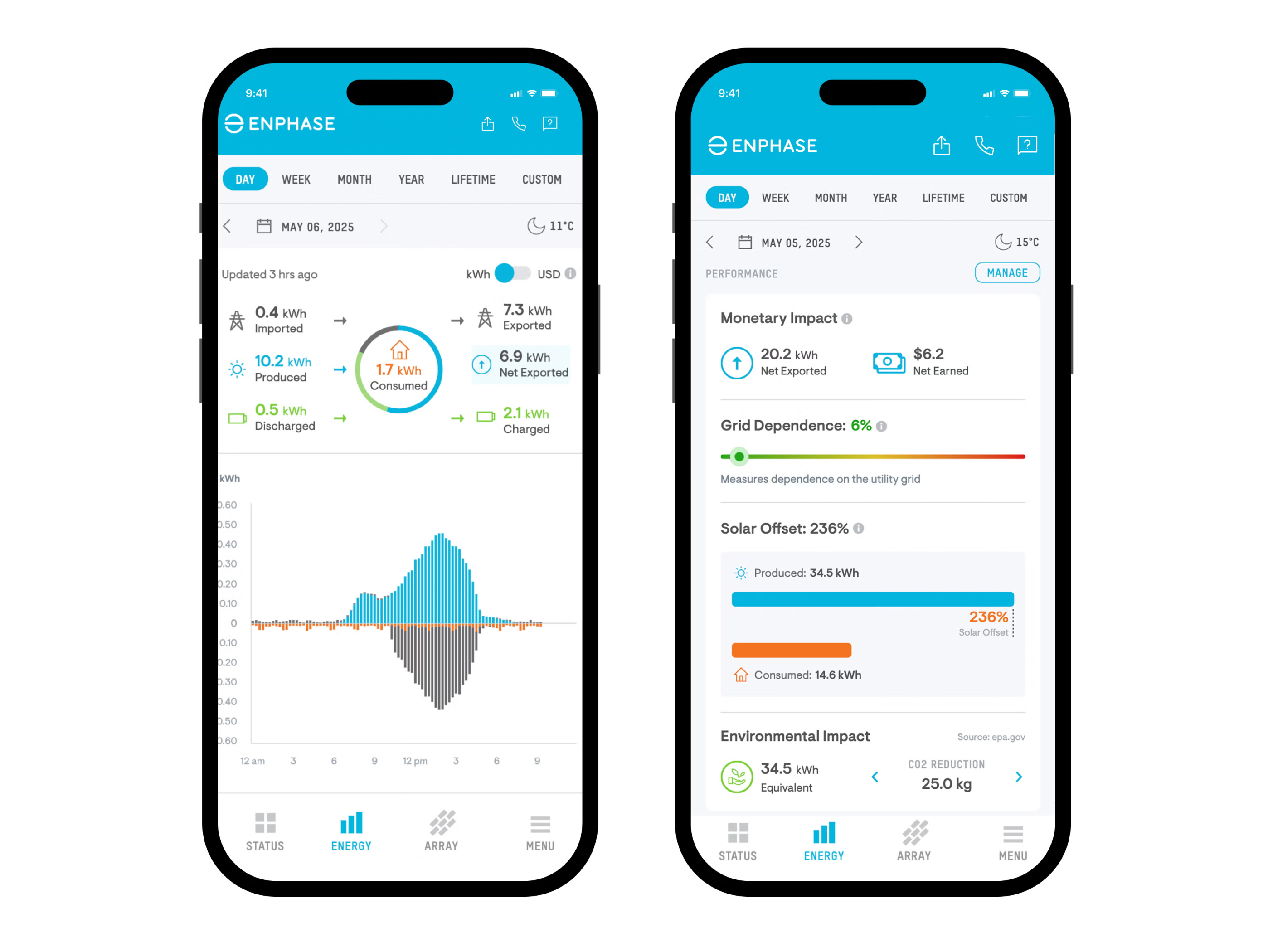
Enphase IQ Series microinverters work with the IQ Gateway to give you detailed insights through the Enphase App. The inverter affects not just performance, but long-term reliability and service continuity.
If you’re considering battery storage, compatible Enphase systems can integrate with Enphase IQ Batteries to store excess energy for later use.
Ask:
What type of inverter system is included, and what monitoring access will I have?
You should understand how shading affects performance and how you’ll track output.
Solar warranty coverage: what is protected?
Solar warranties come in layers, and your quote should clearly outline what is covered and for how long.
A complete residential solar proposal should specify:
- Panel product warranty (covers manufacturing defects)
- Panel performance warranty (guarantees output over time)
- Inverter warranty
- Installer workmanship warranty (and company track record)
- Roof penetration warranty
Each of these protects a different part of your system. Make sure you understand who is responsible for service, and whether the installer is likely to support the system long-term.
With microinverter-based systems from Enphase, microinverter warranties often align more closely with panel lifespan, which can reduce concerns about mid-life equipment replacement.
In addition, Enphase Care provides proactive system monitoring and support when covered repairs are needed. This added layer of service in addition to your installer plan helps identify potential issues early and supports long-term system performance.
Ask your installer:
Who handles warranty claims, what does the service process look like, and how long has your company been in business?
You should know how issues are detected, who initiates repairs, and whether monitoring is included as part of long-term support.
Cost per watt: the best way to compare solar prices
When comparing solar estimates, focus on cost per watt, not just total system price.
Use this simple comparison:
Total system price ÷ Total system wattage = Cost per watt
Example:
$25,000 ÷ 8,500 watts = $2.94 per watt
Cost per watt helps compare pricing differences that reflect equipment quality, monitoring capability, warranty strength, and installation complexity, not just profit margins. In the U.S., average solar installation costs vary by state and roof complexity, so context matters.
Ask:
What is the cost per watt for this proposal, and what does it include?
Expect a breakdown tied to equipment and installation scope.
Solar savings projections: are the assumptions realistic?
Aggressive assumptions can inflate projected lifetime savings. Most solar proposals include a long-term projection based on:
- Projected utility rate increases
- System degradation
- Self-consumption assumptions vs grid export
When reviewing your solar energy quote, ask:
What annual electricity rate increase is assumed in this forecast?
Look for conservative, reasonable percentages.
Solar financing options: what is the total cost?
Two solar quotes may show similar monthly payments but have very different total repayment amounts. Solar financing can vary based on factors like loan term length, interest rate, origination or dealer fees, and early payoff conditions — all of which affect how much you ultimately pay over time.
In addition to loans, some homeowners may be offered solar leases or power purchase agreements (PPAs). These options typically involve little to no upfront cost, but you don’t own the system. Instead, you pay a fixed monthly amount or a rate for the electricity generated. While this can lower the barrier to going solar, it may also limit long-term savings and flexibility compared to ownership.
If possible, compare proposals on a cash basis first. That gives you a clearer baseline before layering in financing.
Ask:
What is the total cost over the life of this loan or agreement?
You should see a full repayment or payment estimate, not just a monthly number.
Installation scope: what is included in writing?
When comparing solar installation proposals, review scope details carefully. Detailed scope documentation and a proven installer track record reduce installation surprises.
Make sure your proposal clearly includes all key elements of the installation, such as permitting and inspections, utility interconnection, and any required electrical panel upgrades. It should also specify whether monitoring hardware is included, if a structural review has been conducted, and how conduit will be routed on your roof or through your home.
Ask:
Are there any potential additional costs not listed here?
You want transparency about possible change orders.
Making the right solar decision
A solar quote may feel technical, but it comes down to a few key factors: system design, performance, and long-term support. Well-designed systems can perform more reliably in real-world conditions like shading, while giving you clear visibility into performance through monitoring tools.
Take your time. Ask clear questions. And make sure your quote makes sense not just today, but decades from now.
Frequently asked questions
Three quotes typically provide enough comparison without becoming overwhelming.
Equipment quality, installer scale, roof complexity, and monitoring capabilities affect pricing.
Solar panels require very little maintenance. With an Enphase system, you typically just need occasional cleaning and routine visual checks, while the Enphase App continuously monitors performance so you’ll know right away if anything needs attention.
Yes, most solar systems can be expanded later, and Enphase makes this especially easy. Because each panel has its own microinverter, you can add more panels, batteries, EV chargers anytime without redesigning the whole system.
Shading doesn’t make solar ineffective, but its impact depends on your inverter technology. With Enphase microinverters, only the shaded panel is affected, while the rest of your system continues producing power at full output. This makes Enphase systems far more resilient in real‑world shading conditions.
Installation usually takes 1–3 days, though permitting may extend the timeline.
Solar can significantly reduce your electricity bill, but whether it eliminates it completely depends on your energy use, system size, and local utility policies. With an Enphase system optimized for maximum production, many homeowners offset most of their annual energy costs.
If a panel or microinverter fails, monitoring helps identify the issue quickly, especially in systems with panel-level visibility.
Most solar equipment is covered by warranties, so repairs or replacements are typically handled by the installer or manufacturer. The response time depends on the warranty terms and service process, but well-designed systems make it easier to detect and resolve issues with minimal disruption.