What is Rapid Shutdown?
Rapid Shutdown is a critical safety feature that quickly reduces the voltage in a solar energy system to safe levels during emergencies.
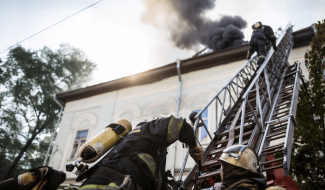
In case of a fire or other hazards, first responders like firefighters could get an electric shock if electrical parts stay powered. To prevent this, the National Electrical Code (NEC) mandates the Rapid Shutdown feature to ensure a safer working environment.
Why Rapid Shutdown is needed in solar PV systems
Traditional solar PV systems are DC-based, meaning they produce direct current (DC) electricity, which remains live as long as sunlight is available. A solar panel system has conductors that become electrically charged any time the sun is shining. Without a Rapid Shutdown device, there is no safe way to turn off the voltage and current running through those conductors for DC-based Solar PV systems. This poses a serious electrical hazard to first responders and maintenance personnel, as DC wiring retains high voltage even when the inverter is switched off.
To address this risk, the National Electrical Code (NEC) mandates Rapid Shutdown for rooftop solar systems to reduce high DC voltage hazards. All controlled conductors must be de-energized to 30 V or less within 30 seconds of shutdown activation.
How Enphase systems are different
Unlike traditional DC-based PV systems, where high-voltage DC wiring runs through the home and requires extra shutdown devices, Enphase systems are ALL AC-based.
Each solar panel has a built-in microinverter that immediately converts DC to AC power at the module level, eliminating high-voltage DC risks entirely. Enphase systems operate at low-voltage AC 240 V, just like the power in your home, making them inherently safer and fully compliant with NEC standards—without requiring additional Rapid Shutdown hardware.
Because Enphase microinverters handle Rapid Shutdown at the panel level, they remove the need for additional components like optimizers or Rapid Shutdown transmitters that are required in DC-based string inverter systems. This simplifies installation, enhances safety, and ensures compliance with NEC regulations out of the box.
Rapid Shutdown for battery backup systems
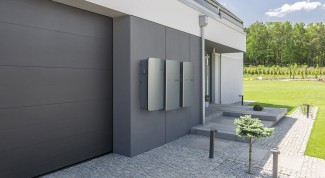
Rapid Shutdown isn’t just for solar panels—it also applies to battery backup systems. During a grid outage or emergency, battery storage systems continue to provide power to the home. However, if a shutdown is needed, these batteries must automatically stop delivering electricity to prevent electrical hazards.
- Why is this important? Even if the solar panels stop producing power, batteries store energy and can continue feeding electricity into the home’s circuits. Without Rapid Shutdown, this could create a shock risk for firefighters or maintenance personnel.
- How does it work? When Rapid Shutdown is triggered, the battery system is disconnected from the home's electrical wiring, preventing unintended power flow. This ensures that no live circuits remain energized in the event of an emergency.
- How Enphase ensures safety: Enphase energy storage solutions are designed to integrate seamlessly with Rapid Shutdown protocols, ensuring that both solar panels and batteries are safely deactivated when required.
How Rapid Shutdown works
Step 1: Activating Rapid Shutdown
Rapid Shutdown can be triggered in two ways:
- Manual activation: This involves pressing a dedicated shutdown switch or an emergency stop button. This is typically used in situations where immediate shutdown is necessary for safety reasons.
- Automatic activation: This occurs when there is a grid disconnection, an AC breaker trip, or an inverter fault detection. The system automatically detects these issues and initiates the Rapid Shutdown process to prevent any potential hazards.
Step 2: Voltage reduction process
- In traditional systems, a Rapid Shutdown transmitter sends a signal to module-level shutdown devices, such as optimizers or microinverters, instructing them to stop power production. This ensures that the voltage is quickly reduced to safe levels.
- At Enphase, each microinverter instantly stops converting DC to AC, effectively cutting off the voltage at the module level. This immediate response enhances safety by reducing the risk of electric shock.
- According to NEC (National Electrical Code) regulations, all controlled conductors must be de-energized to 30 V or less within 30 seconds of initiating the Rapid Shutdown. This ensures that the system is safe to handle in a very short amount of time.
Step 3: Ensuring safety after shutdown
- Once the Rapid Shutdown is complete, the system remains de-energized until power is either restored or manually restarted. This prevents any accidental re-energization that could pose a risk.
- All accessible components, including rooftop panels and wiring, are safe for first responders to handle without the risk of electric shock. This is crucial for emergency situations where quick and safe access to the system is necessary.
By integrating Rapid Shutdown directly into microinverters, Enphase eliminates the need for additional shutdown devices. This integration makes the process seamless, reliable, and fully compliant with NEC regulations, ensuring both safety and efficiency.
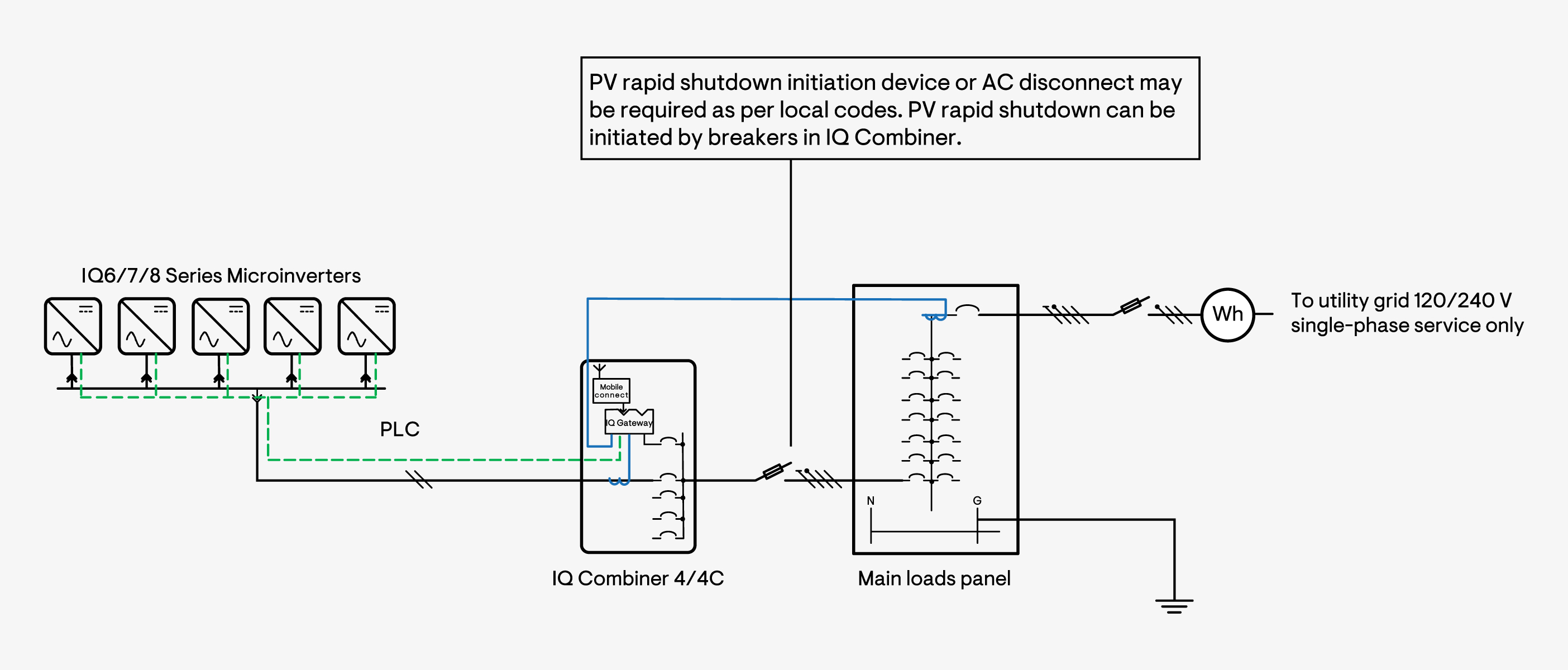
Benefits of an integrated Rapid Shutdown feature
Enhanced safety for first responders
Rapid Shutdown dramatically lowers the risk of electric shock during emergencies. With your system de-energized in seconds, firefighters and emergency personnel can work safely without the hazard of live electrical components. This feature is especially crucial in situations where quick access to the building is necessary, as it ensures that all parts of the solar array are safe to touch and handle.
Simplified installation and compliance
An integrated approach eliminates the need for extra disconnects or additional wiring. This streamlined solution saves installation time and cost while ensuring your system meets the latest NEC standards right out of the box. Integrating Rapid Shutdown into microinverters reduces the complexity of the system, making it easier for installers to set up and for homeowners to maintain.
Improved system reliability
Rapid Shutdown feature ensures that your system operates safely at all times, even under unexpected conditions. This reliability extends to the overall durability of the system, as fewer components mean fewer points of failure. Additionally, the microinverters' ability to operate independently ensures that if one panel or inverter fails, the rest of the system continues to function properly.
Enhanced monitoring and maintenance
Advanced monitoring capabilities allow homeowners and installers to track the performance of each panel in real-time. This feature not only helps in identifying and addressing issues promptly but also ensures that the system is always operating at its optimal efficiency. The integrated Rapid Shutdown feature works seamlessly with the monitoring system, providing an added layer of safety and reliability.
Environmental and economic benefits
A safe and smooth operation contributes to the overall sustainability of the solar energy system. The reduced installation time and maintenance costs translate to economic savings for homeowners, while the enhanced safety features provide peace of mind. Moreover, the reliable performance of the system ensures that homeowners can maximize their return on investment by generating more clean energy over the system's lifespan.
NEC requirements: A brief overview
The NEC introduced Rapid Shutdown requirements in 2014 and has refined them in the NEC 2017, 2020, and 2023 editions. Key points include:
- NEC 2014: Conductors more than 10 feet from the solar array—or at least 5 feet inside a building—must be de-energized during an emergency.
- NEC 2017 and later: Shutdown occurs at the module level. Any conductor more than 1 foot from the array—or over 3 feet inside the building—must be reduced to a safe voltage (typically 30 volts or less) within 30 seconds.
- NEC 2023: Exempts certain structures like carports, parking shade structures, and solar trellises, as firefighters typically don’t conduct rooftop operations on them.
These updates ensure that only a minimal amount of wiring remains energized during an emergency, greatly enhancing safety.
Rapid Shutdown safety beyond the U.S.
Rapid shutdown requirements are spreading globally as more countries adopt safety standards for solar PV systems.
Brazil
The ABNT NBR 17193:2025 standard requires PV systems on buildings to reduce voltage to ≤60V DC and ≤25V AC within 30 seconds to protect emergency responders. Enphase microinverters comply with this requirement natively, eliminating the need for additional shutdown devices.
Canada
The Canadian Electrical Code (CEC) Rule 64-218 mandates rapid shutdown for PV systems if conductors extend more than 1 meter from the array. These must de-energize to 30V or less within 30 seconds for firefighter safety.
European Union
While there’s no single EU-wide rule, some countries have their own standards. Germany’s VDE-AR-E 2100-712 standard requires rapid shutdown mechanisms similar to NEC, prioritizing firefighter safety. Other nations, including France and Italy, are also adopting similar safety measures.
As more regions introduce rapid shutdown regulations, integrated solutions like Enphase microinverters simplify compliance while enhancing system safety worldwide.
More than a regulatory requirement
Rapid Shutdown is more than just a regulatory requirement—it’s a vital safety feature that protects lives and enhances the reliability of your solar energy system. With Enphase microinverter systems, you get an integrated solution that simplifies installation, ensures compliance with NEC standards, and offers superior safety for your home.
Ready to upgrade to a safer, smarter solar solution? Discover more about Enphase systems and take the next step toward a safer energy future.
FAQs
Yes. Enphase systems include surge protection through the IQ System Controller, which acts as the central hub for grid connection, backup management, and system safety. It provides integrated rapid shutdown, automatic transfer switching, and built-in surge protection, ensuring your home and energy system are protected from voltage spikes and grid disturbances.
With an Enphase system, no extra cost is added at all. Rapid shutdown technology has evolved from bulky add-ons to features integrated directly into the inverters you're already purchasing—and because the requirements are now universal, it's included as standard equipment. String inverter systems still require separate transmitters and panel-level devices that add both cost and complexity—which is one reason the Enphase all-AC microinverter approach is inherently simpler and more cost-effective to install.
Even when solar panels stop producing power, batteries continue storing and supplying energy—so during a shutdown event, the battery system must also disconnect from the home's electrical wiring to prevent live circuits from remaining energized. Enphase IQ Batteries are designed to integrate seamlessly with rapid shutdown protocols, ensuring both your solar panels and battery storage are safely deactivated together when needed.
No—and this is one of the most common misconceptions homeowners have. Turning off the main breaker cuts power to your home, but the wires running from the roof to the inverter can remain energized with up to hundreds of volts of DC electricity as long as sunlight is hitting the panels. Rapid Shutdown is specifically designed to eliminate this risk—Enphase IQ Microinverters stop converting power at the panel level itself, making the entire system safe instantly.