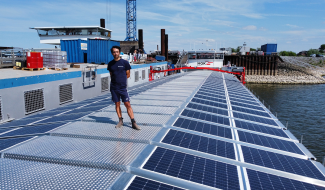
Wattlab, a Netherlands-based startup, is leading advancements in one of the hardest-to-decarbonize sectors. Founded by Bo Salet, David Kester, and Siebe Roefs in 2017 while they were still university students, this innovative solar installer combines engineering expertise with a deep understanding of the maritime industry’s unique demands.
Wattlab’s mission is clear and ambitious: to accelerate maritime decarbonization by delivering scalable, real-world solar solutions for both inland and seagoing vessels. By integrating advanced solar technology—like microinverters—into resilient, creative system designs, Wattlab is proving that solar technology can thrive in even the most challenging maritime environments.
Innovative solar solutions for the maritime sector
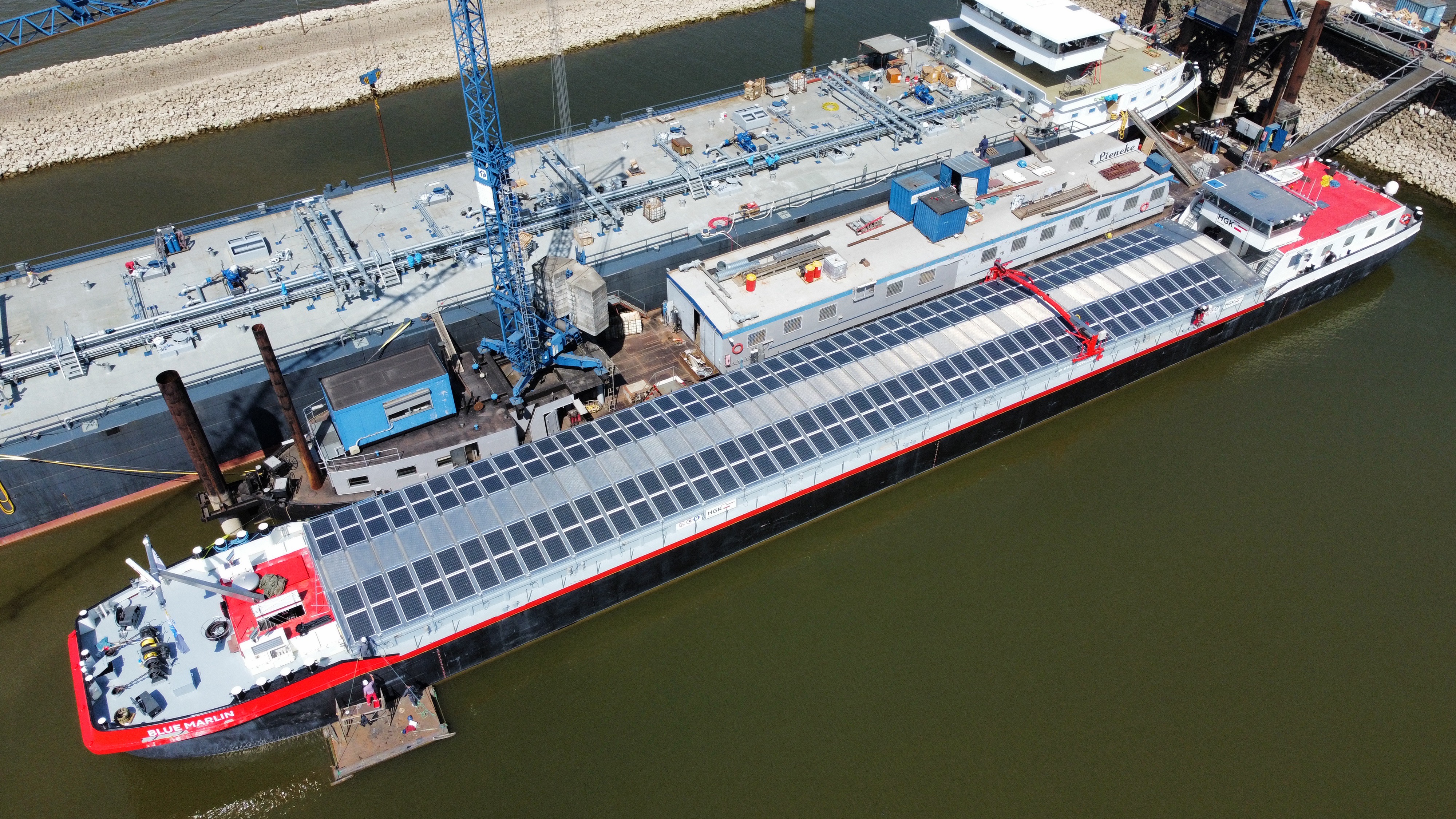
Wattlab specializes in lightweight, modular solar technology specifically designed for maritime applications, addressing challenges from space constraints to harsh operating conditions with its product offerings. The SolarHatch system features custom-made panels for every vessel, while the Solar Flatrack uses container twist lock fittings for rapid installation and can be stored in standard containers when not in use, freeing valuable deck space for cargo activities.
“What I enjoy most is visiting the vessels and speaking directly with our customers to learn their specific needs,” explained David Kester in a recent conversation with Enphase. “Every ship presents a unique opportunity to innovate and tailor each Enphase system to meet those needs. It’s really exciting.”
Wattlab’s products are engineered to withstand saltwater, storms, and heavy-duty maritime operations while remaining easy for crews to maintain and repair, which is critical for vessels when far from the shore.
A partnership built on performance
From Wattlab’s inception, Enphase microinverters have been a cornerstone of its innovative and resilient solar solutions. David recalls, “We thoroughly tested them under the extreme conditions at sea, and since then we’ve trusted their reliability and versatility for Wattlab’s unique systems.”
With confidence from this early experience, Wattlab has integrated Enphase microinverters in all its systems. This integration enabled the startup with live monitoring capabilities, enhanced safety features, and true plug-and-play installation that adapts to even the most challenging maritime conditions. “Size matters when installing on vessels,” David explained. “Enphase microinverters are small so they can fit in a ship’s hatch—and at the same time, they can scale easily to meet growing energy needs.”
For ship owners, Enphase microinverters maximize energy yield, reduce operational costs, and result in cleaner, quieter voyages. Without having to rely on noisy, polluting generators, seagoing vessels can extend their trips and improve energy efficiency, while inland waterway vessels can reduce fuel costs and environmental impact on the communities they visit.
Driving transformation with solar
Wattlab has already designed and installed over 30 commercial shipping projects powered by its SolarHatch solution, and it has recently expanded to seagoing vessels with its Solar Flatrack system. In partnership with TNO and sustainable maritime provider Vertom and backed by the EU Just Transition Fund, Wattlab has completed two Solar Flatrack pilot projects. On Vertom’s 7,280 dwt general cargo vessel Anette, Solar Flatrack has already delivered reliable performance through storms, and it is projected to save 20 metric tons of fuel and 68 metric tons of CO₂ emissions annually.
“One of the most exciting moments during the second pilot project was when we officially connected the system,” David recalled. “That enabled us to monitor it remotely, tracking real-time production and performance, even as the vessel traveled to Egypt. It was a powerful validation of our technology in action.”

Charting a course for the future
With a third Solar Flatrack pilot launching at the end of the summer, Wattlab is rapidly scaling up to help transform seagoing vessels, one solar-powered journey at a time.
From university solar projects to pioneering maritime applications, Wattlab combines technical expertise with practical industry insight. For the team, the work goes beyond engineering—it's about discovering new possibilities and connecting with the people who make maritime shipping possible while providing targeted solutions to support them.
“The nicest part about this whole journey is that I’ve gotten to learn about this whole new world that I didn’t even know existed,” David shared. “Seeing our customers experience true energy independence on the water is truly rewarding.”
Wattlab’s expansion into seagoing vessels marks a step forward in promoting cleaner and more sustainable maritime shipping globally.