Homeowners exploring solar often come across a newer option: solar shingles. Instead of sitting above the roof like traditional solar panels, they blend into the roofing surface and generate power more discreetly.
But beyond aesthetics, how do solar shingles really compare to traditional solar panels? Here’s a clear, side-by-side look to help you make an informed decision.

What are solar shingles?
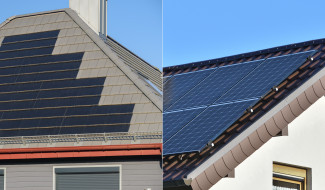
Solar shingles—sometimes called solar roof tiles or building-integrated photovoltaics (BIPV)—are roofing materials with solar cells built directly into them. Instead of adding solar panels on top of the roof, the roof itself becomes the solar system.
The concept gained major attention when Tesla introduced its Solar Roof and GAF launched Timberline Solar, positioning solar shingles as a sleek, design-driven alternative to visible panels. Their promise of turning the entire roof into a power-producing system sparked renewed interest in a technology that had previously existed mostly in niche applications.
Solar shingles typically:
- replace traditional roofing material
- sit flush with the roofline
- have lower airflow beneath them
- offer strong aesthetics with minimal visibility
Solar shingles vs. solar panels
| Feature | Solar shingles | Traditional solar panels |
|---|---|---|
| Cost per watt | Higher, due to combined roofing + solar cost | Lower and more predictable cost |
| Efficiency | Typically lower; more heat buildup | Higher and backed by decades of data |
| Heat performance | Limited ventilation → reduced output | Airflow gap improves cooling |
| Durability | Integrated; repairs may require roof work | Easy module-level servicing |
| Aesthetics | Seamless roof appearance | Prominent panels |
| Installation | Complex | Streamlined and standardized |
| Lifespan data | Less long-term field data | Extensive global reliability data |
Core difference
Solar panels are engineered primarily for high performance, efficiency, flexibility, and reliability supported by more than 50 years of performance data. While solar shingles are designed to blend into the roof and act as both roofing material + solar generator.
Performance and efficiency
Solar shingles
Solar shingles operate at higher temperatures because they’re flush with the roof. Multiple studies show that every 1°C (1.8°F) above 25°C can reduce solar output by 0.3–0.5%. Over time, this compounds into lower annual production.
Solar panels
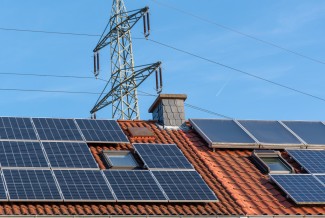
Solar panels have airflow beneath them, which lowers operating temperature and preserves performance. Decades of National Renewable Energy Laboratory (NREL) research show degradation rates of ~0.5% per year—reliable and predictable for long-term use.
Durability and lifespan
Since solar shingles act as both roofing and solar system, shingle-level issues may require re-roofing work. And since shingles are newer, long-term field data is limited. There’s also an added risk, only a handful of companies produce and service solar shingles. If a manufacturer goes out of business or discontinues its product line, making repairs, servicing, or replacing shingles may become difficult or even impossible.
Panels come with decades of global field validation and well-understood long-term performance. Pairing them with Enphase microinverters provides module-level monitoring to help detect performance changes early. Enphase Care adds another layer of protection with proactive system monitoring and support when covered repairs are needed, helping maintain performance and peace of mind over time.
Installation complexity
Solar shingles
They often require a full roof replacement or partial reroof, making installation more involved from the start. Because they act as both roofing and solar equipment, they need combined roofing-electrical expertise and careful weatherproofing. These added steps lead to longer timelines, and the Department of Energy’s (DOE) BIPV studies show higher labor complexity and cost. Also, with only a few manufacturers, the number of trained installers is limited, which can further increase scheduling challenges.
Solar panels
Solar panels follow a much more standardized process. Installers assess the roof, add mounting hardware, and complete straightforward wiring. Decades of established practices make the job predictable, efficient, and easier to service over time.
How much do solar shingles cost?
Solar shingles
These remain one of the most expensive solar options because they serve as both roofing material and power-generating equipment. Their specialized installation, broader labor scope, and generally lower efficiency all contribute to higher upfront costs. Many solar-shingle manufacturers are also newer to the solar industry or not involved in storage, which can affect system compatibility and long-term support. NREL’s BIPV research indicates that these systems often struggle to deliver a strong ROI within a typical 20-year payback window, especially when compared to conventional rooftop solar.
Solar panels
They offer stronger overall economics thanks to lower equipment cost per watt, a standardized installation process, and shorter labor timelines. Their higher long-term efficiency further boosts lifetime energy production. Decades of industry data show that panel systems consistently achieve faster payback periods and higher long-term savings for most homeowners.
Aesthetic appeal
Solar shingles excel in aesthetics. They’re nearly invisible and ideal for strict HOA or architectural requirements. But today’s solar panels are far more attractive than older generations, featuring all-black designs, low-profile mounting, and concealed wiring.
Serviceability and upgrades
Diagnosing and replacing individual solar shingles can be more complex, since their integrated design may require removing or adjusting surrounding roof tiles to access the problem area.
Solar panels, on the other hand, generally offer simpler maintenance and more flexibility for future system changes. Homeowners can add panels if their energy needs grow, pair the system with batteries or EV charging, and troubleshoot individual modules without disturbing the rest of the roof.
Who should choose solar shingles
Solar shingles are a strong fit for homeowners already planning to replace or rebuild their roof, especially if a seamless, low-visibility design is a top priority. They work best on simple, unshaded roof surfaces where aesthetics matter as much as performance. While they come with higher upfront costs, some homeowners are willing to trade maximum energy output for a more integrated architectural look.
Who should choose solar panels
Solar panels are ideal for homeowners who want the highest performance, the best long-term savings, and a straightforward installation process. They’re a practical choice when the roof is in good condition and when future expansion—such as adding more panels, batteries, or other upgrades—may be important. With a long track record and predictable results, solar panels remain the most cost-effective option for most homes.
Making an informed choice
Solar shingles are an appealing option during roof replacements or new construction, especially if aesthetics is the top priority. But for most homeowners, high-efficiency solar panels deliver superior value, better performance, easier maintenance, and a stronger long-term return on investment.
If you’re exploring solar, connecting with an Enphase installer can help you evaluate your roof, energy needs, and the best system design for your home.
FAQs on solar shingles
Often, yes. Solar shingles sit flush against the roof, which limits airflow and prevents optimal tilt. Research from the National Renewable Energy Laboratory (NREL) shows that higher operating temperatures can reduce solar efficiency. In addition, many solar shingles have lower efficiency ratings than conventional panels, meaning they produce less energy per square foot.
Manufacturers typically estimate a 20–25 year lifespan, similar to solar panels. However, solar shingles haven’t been in the market long enough to confirm their long-term durability, and roof wear or integration issues may affect actual lifespan.
No. DOE’s roofing guidelines confirm that some roofs don’t meet solar load requirements for shingle integration.
Possibly, but it isn’t guaranteed. Many solar-shingle systems are new and rely on proprietary equipment, so their compatibility with various battery systems—especially for off-grid or backup use—remains unclear.
Yes. Market data from SEIA shows declining solar installation costs for solar panels.
Solar shingles tend to cost significantly more than traditional solar panels because they function as both roofing material and power-generating equipment. Installation is more complex, often requiring a roof replacement, specialized labor, and longer timelines. They also operate at higher temperatures, which can lower efficiency and reduce output over time. Accessing or replacing individual shingles can be more difficult, making maintenance less straightforward.
The 20% rule usually refers to the idea that solar panels should have at least 20% efficiency to be considered high-performance. Today, many modern panels fall in the 19–22% range. Higher efficiency panels produce more power in less space, which is especially helpful for homes with limited roof area.