
With the rising cost of electricity and Connecticut’s push for clean energy, solar power is increasingly attractive for homeowners and businesses. Fortunately, there are numerous solar incentives and rebates available to make the transition to solar more affordable. In this guide, we’ll explore the key solar incentive programs and policies that have shaped solar adoption in Connecticut and what homeowners should consider today.
Connecticut has been aggressively promoting solar energy to meet its renewable energy goals. For you, this means a variety of financial incentives to reduce the initial cost of solar system installations. From the federal solar tax credit to state-level financing programs, there are plenty of ways to make solar power more affordable.

State-level solar incentives and rebates
Connecticut offers a range of state incentives and rebates. These include sales and property tax exemptions, as well as state-run programs designed to help you go solar.
Residential Renewable Energy Solutions (RRES) program
The program offers two main options for Connecticut residents: the Netting Tariff and the Buy All Tariff.
- Netting Tariff: Similar to net metering, this allows you to earn credits for any excess electricity sent to the grid, which you can use to offset future utility bills. The credit is provided at the current per-kWh retail rate (which can vary by rate plan) charged by the two main utilities, Eversource and United Illuminating.
- Buy-All Tariff: You send all the electricity generated by your solar system to the grid, earning credits at a fixed rate of $0.3189 per kWh. You can either apply these credits to your utility bill or receive quarterly payments.
Sales and use tax exemption for solar and geothermal systems
Connecticut exempts solar panel systems from sales tax, which can save homeowners about 6.35% on system costs. For example, a $18,000 system would save around $1,143 with this exemption.
Property tax exemption for renewable energy systems
Connecticut also provides a property tax exemption, meaning that adding solar panels to your home won’t increase your property tax assessment, even though they increase your home’s value.
Smart E-Loan program
The Connecticut Green Bank’s Smart-E Loan program provides low-interest financing for energy-efficient home improvements, including solar panels.
Loan terms (2025)
- 5 years: 6.99% APR
- 7 years: 6.99% APR
- 10 years: 6.99% APR
- 12 years: 7.49% APR
- 15 years: 7.99% APR
- 20 years: 7.99% APR
One advantage of this loan is that you can use up to 25% of the funds for non-energy-related home improvements. For example, if you need to repair or replace your roof before installing solar panels, you can use the loan to cover a portion of those costs.
How do I get a rebate for solar panels in Connecticut?
Connecticut no longer offers direct rebates for solar installations. The Residential Solar Investment Program (RSIP) was phased out, and the Residential Renewable Energy Solutions (RRES) Program took its place.
However, rebates for battery storage systems are still available. The Energy Storage Solutions Program offers up to $7,500 in rebates for eligible battery systems, helping you pair solar installations with energy storage.
Net Metering in Connecticut
Though traditional net metering in Connecticut is no longer available, the state’s Residential Renewable Energy Solutions (RRES) program provides similar benefits. Under the Netting Tariff, excess solar energy that you send to the grid earns credits to offset future energy costs. These credits can roll over indefinitely, making it a more advantageous program than the previous net metering system.
The Buy All Tariff allows homeowners to sell all the solar energy they produce back to the utility at a set price. Homeowners can choose to receive this as a bill credit or a cash payout.
Estimated cost savings in Connecticut
The exact savings from switching to solar depend on various factors, including system size, location, and energy usage. However, a typical 6kW solar panel system in Connecticut costs about $18,000. After applying available state incentives and property tax exemptions, the overall cost can be reduced further.
The exact savings from switching to solar depend on various factors, including system size, location, and energy usage. However, a typical 6 kW solar panel system in Connecticut costs about $18,000. After applying the state sales tax exemption of 6.35%, the system cost in this example is reduced by $1,143, bringing the effective cost to $16,857. Connecticut’s property tax exemption further improves long-term value by ensuring that adding solar panels does not increase a homeowner’s property tax assessment.
The long-term savings on energy bills make solar an attractive investment even without a federal tax credit. Over the life of a solar system, homeowners can still save tens of thousands of dollars in electricity costs by offsetting utility usage and protecting against rising energy rates.
Payback periods and long-term savings
One of the reasons going solar in Connecticut makes a lot of sense is the relatively short payback period for system installation cost, thanks to the combination of federal and state incentives and high electricity costs. As noted above, the effective upfront cost for a typical 6 kW system after applying the state sales tax exemption is approximately $16,857.
Calculating the payback period
Connecticut has some of the highest electricity rates in the country, averaging around $0.24 per kWh. A 6-kW solar system in Connecticut on average produces about 7,200 kWh annually. This translates to:
7,200 kWh/year X $0.24/kWh = $1,728/year in savings.
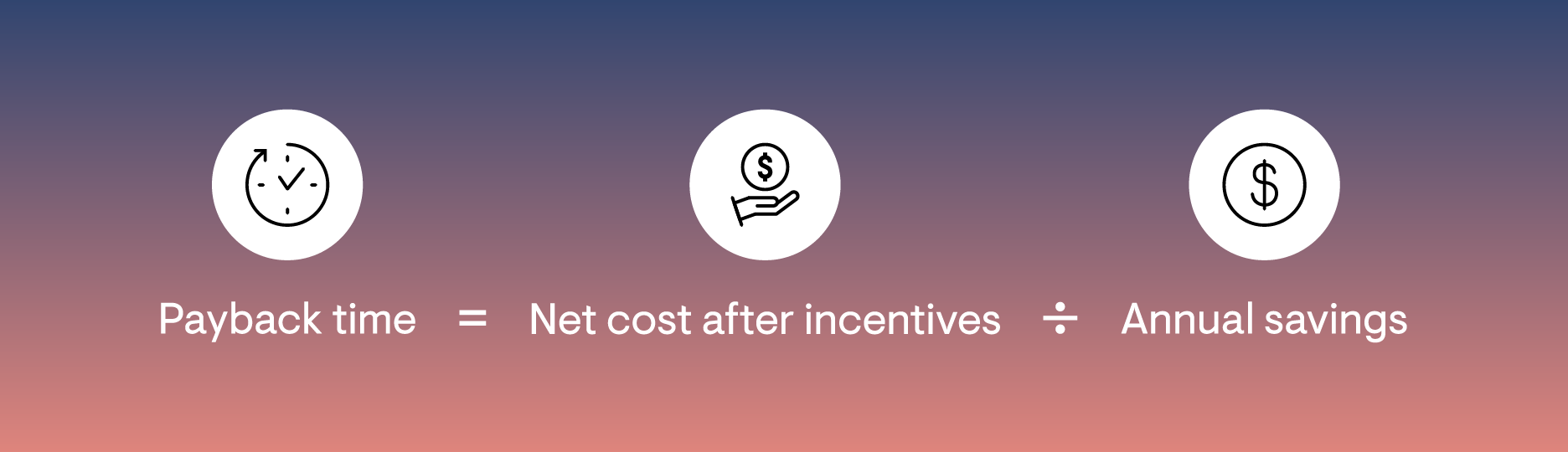
$16,857 ÷ $1,728 ≈ 9.8 years
So, in roughly 10 years, your system will be paid off.
Long-term savings
After the system has paid for itself, the remaining lifespan of the system (approximately 18+ years) is pure savings. Over 25 years, homeowners can save tens of thousands of dollars in electricity costs (in this example, it’s over $43,000!), even accounting for a small annual degradation in system efficiency (around 0.5% per year), which will likely be offset by expected increases in electricity rates.
Choosing the right solar system
When it comes to designing the right system, it’s essential to consider your home’s current and future energy needs along with available incentives. The size of your new solar system should be tailored to your electricity consumption now and in years to come, ensuring it can meet all your energy requirements.
Additionally, most solar companies in Connecticut offer battery storage solutions that complement solar panels and maximize energy efficiency. Enphase can help you achieve your energy goals, whether you’re looking to reduce your monthly bills, achieve greater energy independence, or both. Connect with us and we will connect you with expert solar installers offering Enphase solar and battery installation services.
Maximize your savings with solar incentives
Connecticut offers a variety of state programs and utility policies that make solar energy more affordable for residents. From sales and property tax exemptions to the Residential Renewable Energy Solutions Program, these incentives can help lower upfront costs and deliver long-term savings on electricity bills. Whether you’re considering rooftop solar or energy storage, understanding these programs can help you make the most of your investment.
Frequently Asked Questions on Connecticut solar incentives and rebates
No, solar panels aren’t free, but state incentives such as sales and property tax exemptions can help lower the overall cost of installation.
Yes, due to the high electricity rates and generous incentives, going solar in Connecticut can yield substantial long-term savings.
While there are no longer rebates for solar panels, rebates for battery storage systems are available through the Energy Storage Solutions Program.
This program offers up to $7,500 in rebates for battery storage systems installed in conjunction with solar panels.
The Netting Tariff allows homeowners to earn credits for excess solar energy, which roll over indefinitely, reducing electricity bills over time.
The Smart-E Loan from the Connecticut Green Bank is a popular option, offering competitive interest rates and flexible terms.
You can qualify for both sales tax and property tax exemptions as long as your solar system is used for renewable energy and installed at your residence.