Your heating and cooling system is one of the biggest expenses in your home. But many homeowners are still running older systems that guzzle energy and drive up monthly bills. That's where heat pumps come in, and they're changing the game.
Whether you're looking to lower energy costs, reduce your carbon footprint, or simply upgrade to a smarter system, this guide walks you through everything you need to know: how heat pumps work, how much they cost, and whether one makes sense for your home.

How does a heat pump actually work?
Most heating systems burn fuel to create warmth. A heat pump does something smarter, it moves heat instead of creating it.
In winter, it pulls heat from the outside air (yes, even cold air contains heat) and moves it inside your home. In summer, it works in reverse, pulling warm air out of your home and releasing it outside—just like an air conditioner.
That means one system does both jobs: heating and cooling, year-round.
What makes this so efficient? Instead of generating heat from scratch, the pump just moves it, and that takes far less energy. In fact, heat pumps can deliver up to three times more heating energy than the electricity they use. So, for every unit of electricity consumed, you get multiple units of warmth. That's a big deal for your energy bills.
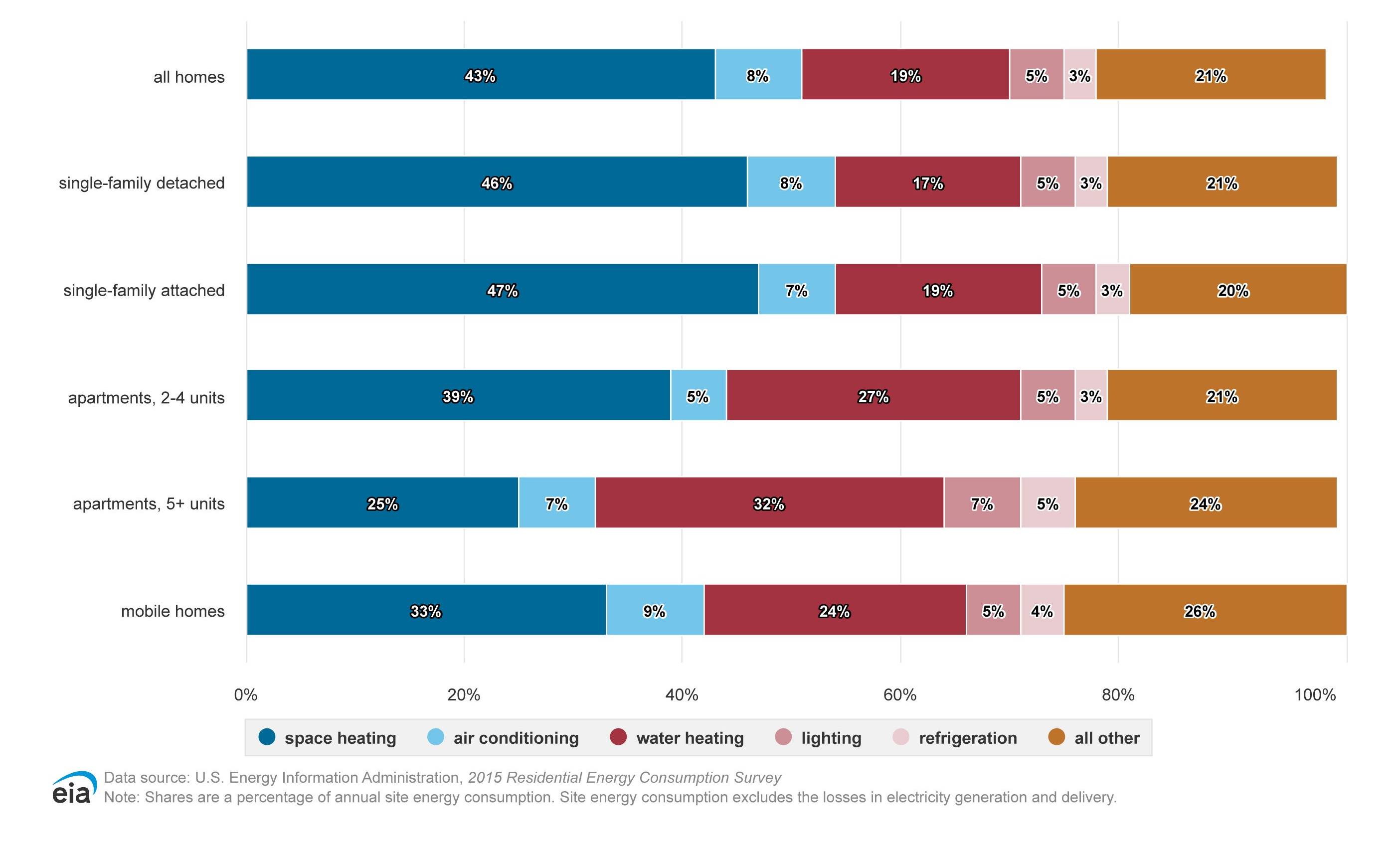
Heating and cooling account for nearly half of the average American home's energy use. Upgrading to a heat pump is one of the most impactful changes a homeowner can make.
Home energy use breakdown by end use
Types of heat pumps for homes: Which one is right for you?
Not all heat pumps are built the same. The right choice depends on your home's size, layout, climate, and whether you already have ductwork in place.
Air-source heat pumps (most common)
Air-source heat pumps are the most widely used type. They transfer heat between your home and outdoor air and can reduce electricity use for heating significantly compared to systems like electric resistance heaters.
They’ve been used across the U.S. for years, and newer models are now designed to perform well even in colder climates. Many also do a better job of controlling humidity than traditional air conditioners, which can improve comfort in summer.
Ducted vs. ductless systems (how air is delivered)
Within air-source systems, how heat is delivered inside your home matters just as much.
- Ducted systems connect to existing ductwork and work like a traditional central HVAC setup. They’re usually the easiest upgrade if your home already has ducts.
- Ductless systems, often called mini-splits, don’t require ducts. Instead, they use indoor units placed in specific rooms. This allows for zone-based heating and cooling, which can reduce energy use by only conditioning the spaces you actually use. These are especially useful in older homes or homes without existing ductwork.
Geothermal heat pumps (high efficiency, higher upfront cost)
Geothermal, or ground-source, heat pumps use the stable temperature underground rather than outdoor air. Since the ground stays at a consistent temperature year-round, these systems are extremely efficient and reliable in all seasons.
However, installation is more complex and expensive, which makes them a better fit for homeowners planning a long-term investment.
Other types (less common for homes)
There are more specialized options, like absorption heat pumps that run on natural gas or other thermal energy sources. These systems are more complex and less common in residential settings.
For most homeowners, air-source systems, either ducted or ductless, are the most practical and widely used options.
Will a heat pump actually save you money?
The short answer: yes, for most homeowners. But a few factors determine how much you can save.
Your climate
Heat pumps thrive in mild to moderate climates and run efficiently year-round. In colder regions, today's cold-climate models still perform well, though efficiency can dip slightly during extreme cold snaps. If you live somewhere with harsh winters, choosing the right model matters a lot.
Your local energy prices
If electricity rates in your area are reasonable compared to gas, the savings can be significant. This is especially true if you're switching from electric resistance heating, which is among the most expensive heating methods out there.
If your utility uses time-of-use pricing—charging more during peak hours—when you run your heat pump also affects your bill. Smart scheduling can help you take advantage of cheaper off-peak rates.
Your home's insulation
A well-insulated, properly sealed home lets your heat pump work at its best. Air leaks and poor insulation force the system to work harder, which reduces savings. Addressing insulation before or alongside your heat pump installation can make a real difference.
Heat pumps are typically cheaper to run than electric resistance heating, and they can match or beat gas systems depending on your local utility rates. Many homeowners see lower costs over time, especially when replacing older or inefficient systems.
Smart thermostats, solar, and batteries can increase heat pump savings
A heat pump is already one of the most efficient ways to heat and cool a home, but smart energy management can help homeowners save even more over time. As more households look for ways to lower energy costs, smart thermostats are becoming increasingly common. In fact, the U.S. smart thermostat market is projected to grow at a 17.5% CAGR through 2030.
Modern smart thermostats can automatically adjust heating and cooling based on weather conditions, household energy use, and time-of-use electricity pricing. For example, some systems can pre-cool or pre-heat a home before peak electricity rates begin, helping reduce expensive grid energy use later in the day.
Pairing a heat pump with solar panels and battery storage can increase savings further. Solar panels can help power heating and cooling during the day, while batteries can store excess energy for use during peak-rate periods or outages. Together, these can help reduce energy waste, improve efficiency, and lower monthly utility bills.
How much does a heat pump cost to install?
Heat pump costs vary depending on the type of system, your home's size, and what installation requires. Most homeowners spend between $4,000 and $15,000 or more for installation. Simpler air-source systems fall on the lower end, while geothermal systems sit on the higher end due to the added installation work.
What drives the cost?
Home size: Larger homes need more powerful (and more expensive) systems.
Ductwork: Homes without existing ducts may need additional installation work.
Number of zones: More indoor units (in ductless systems) mean higher costs.
Electrical panel upgrades: Some homes need an updated panel to support the system.
Efficiency level: Higher-efficiency models cost more upfront but save more over time.
Don't forget about incentives
Federal tax credits and rebates can meaningfully reduce your upfront cost. Programs backed by the U.S. Department of Energy and the EPA are available to eligible homeowners.
Understanding efficiency ratings: COP, SEER, and HSPF
When you start comparing heat pump models, you'll run into a few acronyms. Here's what they actually mean.
COP (Coefficient of Performance) measures how efficiently a heat pump provides heating. A higher value means the system delivers more heat for each unit of electricity used, though performance can vary depending on outdoor temperature.
SEER or SEER2 (Seasonal Energy Efficiency Ratio) measures cooling efficiency over a season. Higher ratings mean lower electricity use during warmer months.
HSPF or HSPF2 (Heating Seasonal Performance Factor) measures heating efficiency across an entire season. Like SEER, higher values generally translate to better performance and lower operating costs.
In simple terms, these ratings help you compare how much energy different systems will use over time. If you’re planning a broader upgrade, it helps to see how everything works together.
Sizing and installation: Why getting it right matters
Choosing the right size system is just as important as choosing the system itself.
A system that’s too large can turn on and off too frequently, a process known as short cycling. This reduces efficiency, creates uneven temperatures, and can shorten the system’s lifespan. It can also increase your upfront cost without improving comfort.
A properly sized system runs more consistently, maintains better comfort, and uses energy more efficiently. That’s why installation quality matters. A good installer will evaluate your home carefully, including layout, insulation, and energy needs, before recommending a system.
When is a heat pump worth it for your home?
A heat pump is often a good fit if you’re replacing an older system, especially one that uses electric resistance, oil, or an aging air conditioner.
It also makes sense if you’re looking to electrify your home or reduce reliance on fossil fuels. Homes with good insulation typically see the best results, and the benefits increase when combined with solar and battery storage.
On the other hand, if your home has poor insulation or very low gas prices, the savings may be more limited unless those factors are addressed.
Frequently asked questions (FAQs)
Most installations take one to three days, depending on the complexity of the system and any additional work needed, like electrical upgrades or new ductwork.
Not much. Basic upkeep like filter cleaning and an annual checkup is usually enough to keep the system running efficiently for years.
In many homes, yes. A single heat pump handles both heating and cooling. In very cold climates, some setups include a backup heating source for the coldest days, but this is becoming less common as cold-climate models improve.
It can help, especially when paired with proper filtration and ventilation. Overall air quality depends on multiple factors, but a well-maintained heat pump with good filters does contribute to a healthier indoor environment.
The main considerations are the upfront cost and the importance of proper sizing and installation. In areas with extreme cold, choosing a cold-climate-rated model is important. But for most homeowners, these factors are manageable with the right planning.
Many homeowners find this a practical time to make the switch. Federal incentives are currently available to help offset upfront costs, and the technology has improved significantly in recent years—including performance in colder climates.