With rising electricity bills, more frequent power outages, and growing concerns about climate change, homeowners across the U.S. are looking for cleaner, more reliable energy options. Renewable energy is no longer just a global solution, it’s becoming personal as many are now directly impacted by rising utility rates and grid reliability. From solar to wind to biomass, each source offers different benefits. But not every option is suitable for residential use.
In this blog, we’ll compare the major types of renewable energy, break down their pros and cons, and explain which ones offer a more practical, accessible choice for residential use today.

Why is there a shift to renewable energy?
The shift away from fossil fuels is gaining momentum now—and for good reason. Climate change, rising electricity bills, and energy insecurity are driving the demand for cleaner, more resilient alternatives.
In 2023, over 21% of U.S. electricity came from renewable sources—led by wind, solar, and hydropower.
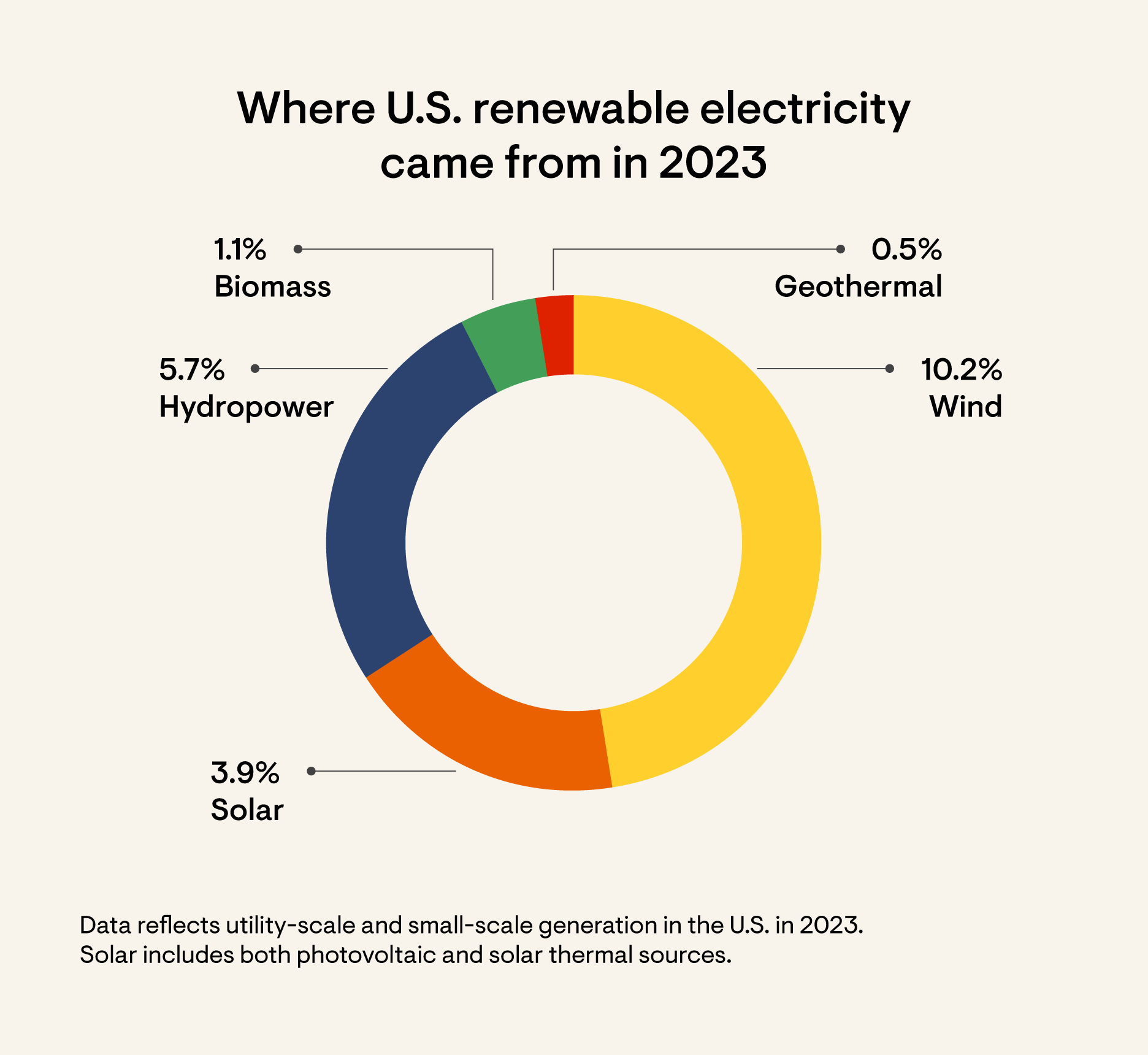
Source: U.S. Energy Information Administration, FAQ on renewable electricity
This momentum is fueled by federal tax credits, growing awareness about sustainability, and state-level changes that make clean energy more accessible. And it’s not just a utility-level shift—homeowners can be part of the movement too, with options like rooftop solar and home battery systems.
Pros and cons of renewable energy
Here’s a quick look at the main types of renewable energy, how they work, and what makes them suitable, or not, for residential use.
| Type of energy | How it works | Pros | Cons |
| Solar energy | Converts sunlight into electricity using photovoltaic (PV) panels installed on rooftops or open ground. |
|
|
| Wind energy | Uses large turbines to capture kinetic energy from the wind and convert it into electricity. |
|
|
| Geothermal energy | Extracts heat from deep within the Earth to power heat pumps or generate steam for electricity. |
|
|
| Biomass | Burns organic materials like wood, agricultural waste, or algae to generate heat or electricity. |
|
|
| Hydropower | Uses moving water (usually via dams or rivers) to spin turbines and generate electricity. |
|
|
The best renewable energy for your home? It’s solar
While wind, geothermal, and biomass offer clean energy benefits, they come with practical limitations for homes. Wind turbines need steady wind and open land, making them unsuitable for most neighborhoods. Geothermal systems require deep drilling and are only viable in certain regions. Biomass involves fuel handling and combustion equipment, which isn’t feasible for most residences.
Solar, by contrast, is uniquely suited for residential use. It installs directly on your roof, requires no moving parts or large infrastructure, and connects easily to your existing utility setup. It’s one of the few clean energy options homeowners can adopt independently.
With financing and the 30% federal tax credit, solar is more affordable than ever. It offers energy independence by reducing reliance on the grid and works even on partially shaded roofs. Panels require little maintenance, usually carry 25-year warranties, and pair well with batteries for backup power. Many homeowners see long-term savings—especially in states with high electricity rates. And if your roof has design challenges, modern systems can often work around them.
Why go solar in 2025?
Choosing solar isn’t just an energy upgrade, it’s a decision that can directly impact your household’s monthly costs, energy reliability, and long-term financial stability.
Greater savings over time
With the 30% federal tax credit currently in place, homeowners can reduce their system cost significantly—though this incentive may decrease in future years. Some states also offer rebates for batteries and other upgrades, but these funds are often limited and awarded on a first-come basis.
Gain more control over rising utility bills
Electricity rates are trending upward nationwide. By generating your own power, you can offset more of your usage and avoid future rate hikes.
Protect your household from policy changes
Billing programs like net metering are evolving. In California, for example, newer customers now earn less for energy they export to the grid under NEM 3.0. Homeowners who went solar earlier were locked into better terms—and similar shifts are happening in other states.
Reliable energy independence
When paired with battery storage, solar can keep key appliances running during outages. That’s a real advantage as extreme weather becomes more common.
Start with solar, think long-term
Every renewable energy source plays a role in a cleaner grid. But if you’re a homeowner looking for something you can act on today, solar is the most accessible, proven option. It fits on your roof, lowers your energy bills, and gives you control over your power—something no other renewable source can offer at the residential scale.
Types of renewable energy sources FAQs
In most cases, yes. While wind and geothermal can be effective in the right conditions, they often require specific land, zoning, or underground access. Solar is generally easier to install, more adaptable to different homes, and supported by more incentive programs.
Yes. Solar panels continue to generate electricity using indirect sunlight, even on cloudy days. Output is lower, but your system will still produce energy. If you have battery storage, you can also rely on stored power during those periods.
Definitely. Solar works well with home batteries, helping store energy for later use or outages. It also complements electric heat pumps, which provide efficient heating and cooling.
From consultation to installation, most systems are up and running within 4 to 8 weeks. Timelines depend on permitting, equipment availability, and your local utility’s interconnection process.
Yes. Systems like geothermal heat pumps and small wind turbines may also qualify for the 30% federal clean energy tax credit and various state programs.