A blackout can happen when you least expect it—during a summer heatwave, a winter storm, or just another day when the grid is under pressure. And when it does, your comfort, safety, and daily routines can grind to a halt: no Wi-Fi, no lights, no fridge, no phone charging.
In fact, power outages in the U.S. have jumped 64% over the last decade. The average home now sees over 8 hours of power outages each year, making backup power less of a luxury and more of a necessity.
The good news is that staying powered during an outage no longer requires a noisy gas generator. A portable power station or a portable solar generator is a cleaner, quieter, and more reliable way to keep the essentials running. This blog will walk you through what it is, how it works, and how you can prepare for the next blackout.
Why battery-powered backup is better during an outage
If you're thinking about ways to stay powered during a blackout, here's the short answer: a backup solution using battery is the best choice. Unlike gas generators that burn fuel, produce fumes, generate loud noises, you can actually use a battery backup solution indoors without worrying.
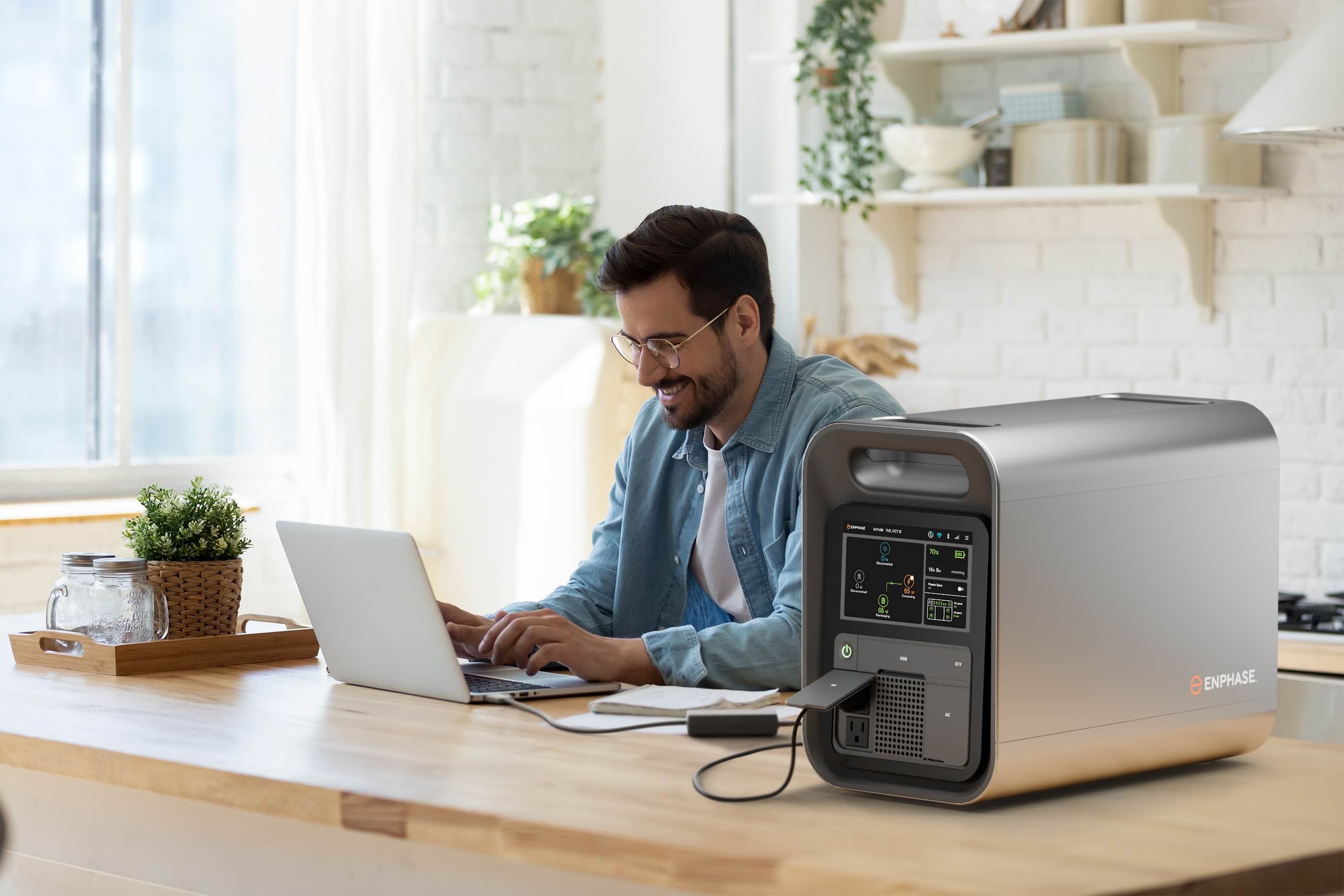
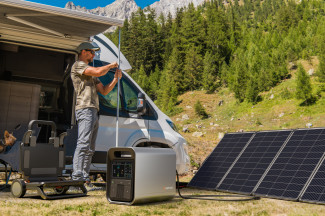
Portable power systems are quieter, rechargeable, easy to move around and safe. You can charge them using a wall outlet at home, a cigarette light socket in your car, or portable solar panels in the backyard. Once they’re charged, just plug in whatever devices that need powering. No noise. No hassle. It just works.
What a portable power station can run during a blackout
One of the first things you would want to know is, what exactly can you power with this? And for how long?
It depends on the device and the battery size of the portable power system. You can use our runtime calculator to see how long a power station can run your specific devices.
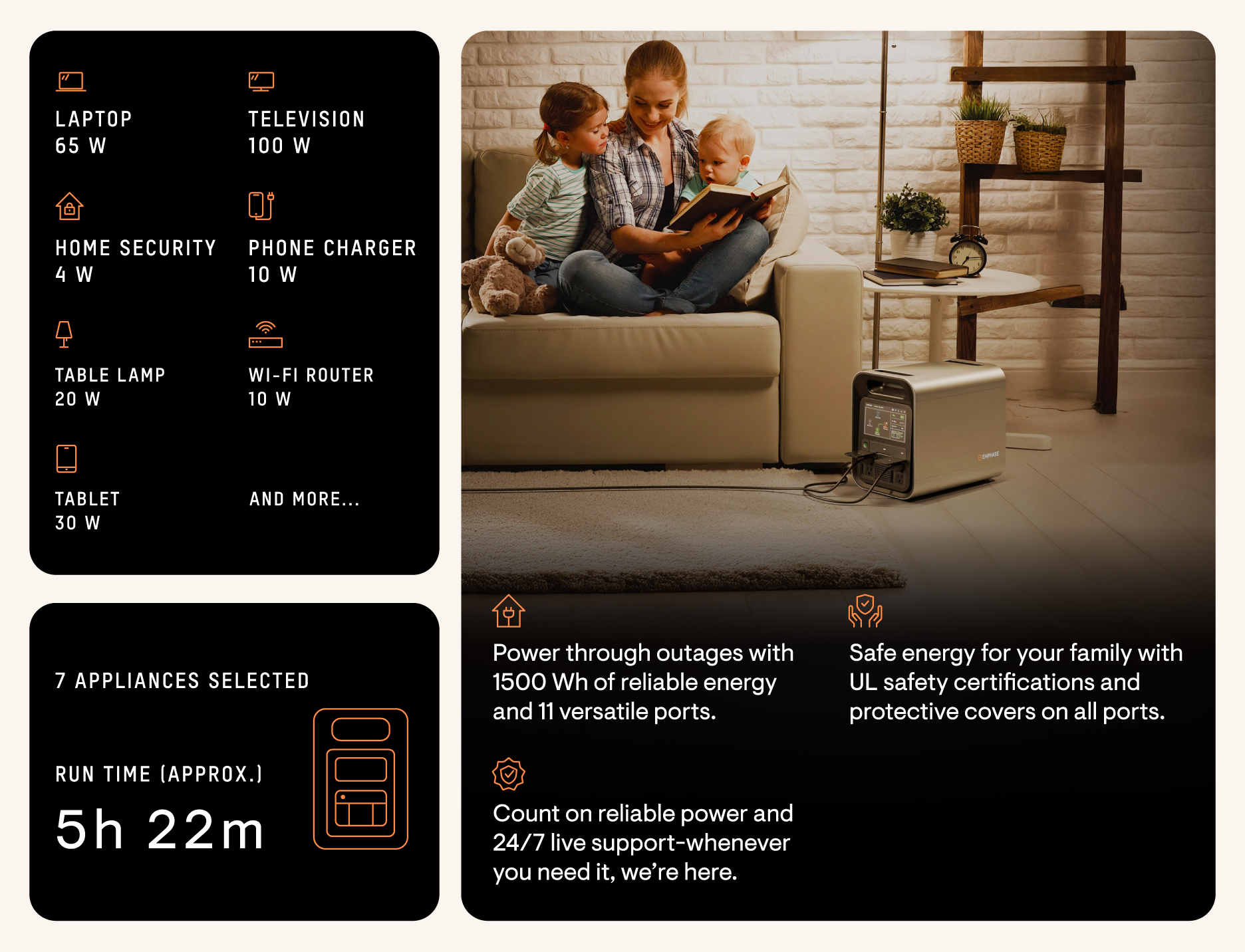
Or see how a 1,500 Wh battery can power different devices. Here’s a look at typical runtimes across common devices:
| Device | Runtime/Charges |
| Wi-Fi router | 57 hours |
| Refrigerator | 9 hours |
| Laptop | 17 hours |
| Smartphone | 57 hours |
| Desktop computer | 11 hours |
| Printer | 5 hours |
| Tablet | 31 hours |
| Table lamp | 40 hours |
| Projector | 19 hours |
| Desktop + printer + router | 3 hours |
| Laptop + router + tablet + phone | 10 hours |
How to use a portable power station during a power outage
Here’s the best part, it’s really easy. When the power goes out, grab your portable power station, bring it into the room and plug in your devices.
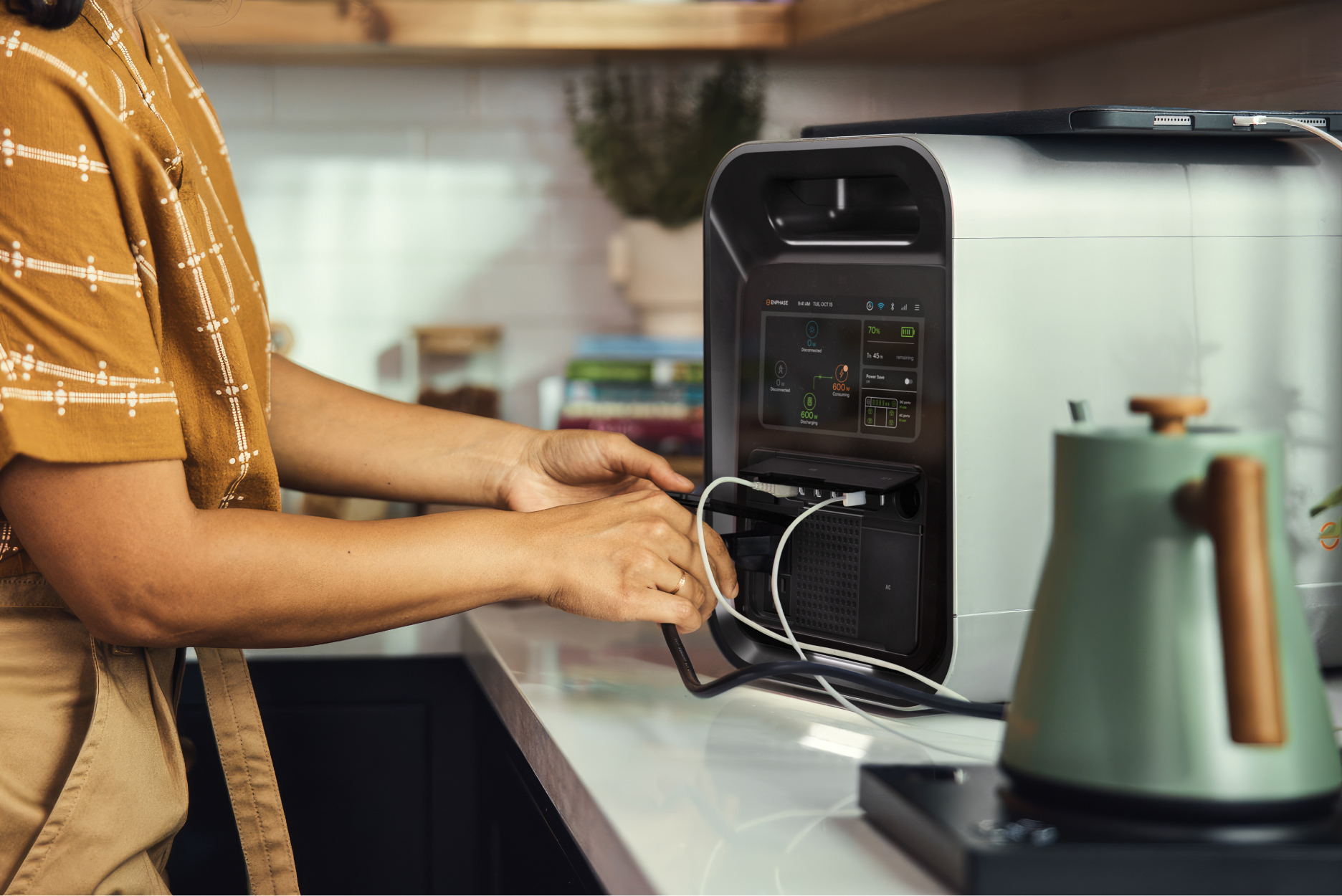
No complicated setup. Just connect your phone, laptop, Wi-Fi router, lamp, or fridge to the various AC, DC or USB ports on the portable power station, and you are back in business. Most systems have a built-in LCD or support a mobile app from which you can check the battery level and the remaining charge time. And with automatic switchover from grid to battery in less than 10 ms, your essential devices stay powered without interruption.
Just make sure that the total wattage of the devices you plug in doesn’t exceed the system’s rated output (typically around 1,500 W for mid-sized models). This kind of flexibility makes a huge difference during a long outage.
What to look for in a blackout-ready portable battery
Not all portable batteries are created equal—especially if you’re counting on them during an emergency.
Here’s what to look for: enough capacity (around 1,500 Wh) to keep things running, multiple output ports so you can plug in more than one device, and smart controls that let you track usage from your phone or directly on the unit.
Also, don’t forget safety and build. Look for UL-certified batteries, weather-protected ports, and a design that’s tough enough to handle bumps and scrapes. A compact body with solid handles also makes life easier when you're moving it around in the dark.
How to prepare your backup power system before a blackout
A portable power station can hold a charge for months without a need to recharge. However, it’s a good idea to check the battery levels every 4 to 6 months and recharge if needed. Keeping it fully charged and ready to go makes all the difference when an outage hits.
If there’s a storm in the forecast or high fire risk in your area, charge the system fully ahead of time. Keep it somewhere you can reach easily, not tucked away in the back of a closet. Test the system with the devices you want to back up before you actually need it, so you know what devices work best and how long they’ll last.
The best way to stay powered during a blackout
Here’s the truth: blackouts are stressful—but staying powered doesn’t have to be.
A portable power station is one of the simplest, safest, and most flexible ways to stay in control when the grid goes down. It powers what matters without noise, the gas, and the mess from a gas generator.
Whether you want to keep working, keep food from spoiling, or just keep the lights on during a blackout, it’s a portable power station is a smart, clean, quiet, and reliable solution that’s ready when you need it.
The IQ PowerPack 1500 from Enphase is a great example—compact, quiet, and powerful enough to back up your essential devices for hours. It’s built for emergencies, weekend trips, and everything in between.
Frequently asked questions
Yes. Unlike gas generators, portable power stations are fume-free and safe for indoor use. You can run them in bedrooms, home offices, or kitchens without worrying about ventilation or carbon monoxide.
It depends on what you’re powering and the system’s battery size. A 1.5 kWh system like the IQ PowerPack 1500 can run a Wi-Fi router for up to 57 hours or power a laptop 17 times.
Yes. Many portable power stations support pass-through charging, which means you can keep your devices plugged in while recharging the unit at the same time.
A portable power station is a standalone, rechargeable battery system with built-in output ports and charging inputs. It stores electricity from a wall outlet, car charger, or solar panels.
Whereas a solar generator refers to a setup that includes a portable power station plus compatible solar panels to recharge it using sunlight. Some solar generators are sold as all-in-one bundles, while others allow you to add solar panels separately.
Yes. Most portable power stations support solar charging, either directly or via optional accessories. Just be sure to check the system’s input rating and panel compatibility if you're buying them separately.