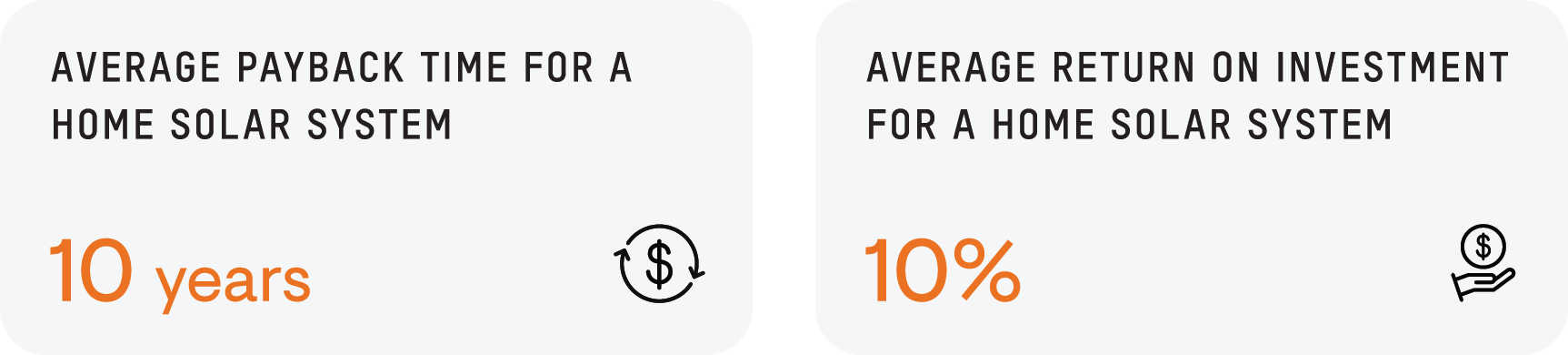
The payback time depends on several factors, starting with the final cost of your Enphase system after available incentives and the financing option you choose. Paying upfront, financing with a loan, or choosing a third-party ownership option can all affect your upfront costs, monthly payments, and long-term savings. Typically, payback for systems paid upfront is between 6 and 12 years, and depends greatly on the cost of energy you’re offsetting and solar incentives you receive upfront or ongoing, like net metering.
Let’s explore some factors that determine payback time.
Electricity rates: These vary widely across the country. State, local, and utility incentives can reduce your upfront and overall system costs, helping shorten your payback period. Depending on where you live, these may include rebates, battery incentives, performance-based programs, net billing or net metering programs, and Virtual Power Plant (VPP) incentives. Some financing options, such as certain prepaid solar leases, may also allow eligible commercial projects to benefit from commercial clean energy incentives that can help reduce homeowner costs.
Your energy consumption: If you use a lot of electricity, offsetting some or all that grid power with solar energy will accelerate your payback. If you also pay high rates, those two factors will combine to accelerate your payback.
Solar incentives: State, local, and utility incentives can reduce your upfront and overall system costs, helping shorten your payback period. Depending on where you live, these may include rebates, battery incentives, performance-based programs, net billing or net metering programs, and Virtual Power Plant (VPP) incentives. Some financing options, such as certain prepaid solar leases, may also allow eligible commercial projects to benefit from commercial clean energy incentives that can help reduce homeowner costs. Many states and utilities offer incentives specifically for adding batteries, further lowering your system cost.
SRECs: States that require utilities to produce a specific percentage of their electricity from renewable energy sources will offer something called solar renewable energy certificates, or SRECs. They can earn additional income for home system owners. We’ll go into more details on SRECs a bit later.
Net energy metering (NEM): We'll go into this and other incentives a bit more in the Incentives section below, but your electric utility may offer programs that compensate you for exporting excess solar energy back to the grid. Depending on where you live, these may include traditional net energy metering (NEM), net billing programs, or California's Net Billing Tariff (NBT). While these programs have evolved over time, they can still play an important role in improving your system's long-term value. Pairing solar with battery storage can help maximize your savings by storing excess energy for later use instead of exporting it when compensation rates are lower. Enphase Energy Systems include smart software and AI optimization that can help adjust import and export timing to make the best use of available export compensation programs and help maximize your energy savings.
Grid services and Virtual Power Plant programs: Even though you’re probably considering adding solar to your home for personal household reasons, there’s also a community reason for going solar: helping to create a cleaner, more stable grid for everyone in your area. It’s done through grid services like Demand Response and Virtual Power Plant programs that send power from your batteries back into the grid during higher-demand periods, such as summer afternoons and evenings, when families get home and use more power for things like air conditioning.
Programs like these pay you for your stored excess energy. That energy helps meet community demand by stabilizing the grid and reducing the potential for blackouts. It can also actually help create a cleaner grid. In many states, utilities rely on what are called “peaker plants” to produce more energy to accommodate peak demand. Often, these peakers are powered by fossil fuels and are expensive to operate. This makes for more expensive power during these peak periods. So, the more people who put their stored excess solar power back into the grid, the cleaner a state’s grid can get.
This is the concept behind VPPs. You and your solar batteries become part of a large network of small solar energy producers (sometimes called distributed energy resources or DERs). Utilities, using planning and analytics software, can access and aggregate power from thousands of batteries simultaneously to, essentially, create a clean virtual peaker plant during times of high demand or grid instability. This lets the utility protect against blackouts and brownouts using clean energy. It also helps reduce the need to build more peaker plants to handle the increasing demand for grid energy as populations grow and more people electrify their homes and transportation.
The best part is that participating homeowners can receive hundreds or thousands of dollars each year in incentives toward home battery purchases or in annual incentive payments to participate in VPPs.
Grid services and VPPs differ in participation periods and compensation levels based on your region, utility, and local or regional grid needs. Enphase Energy Systems with IQ Batteries make it easy to enroll in grid services, and you can still use your stored battery energy for backup if the grid goes down. Just enable Enphase Storm Guard to prioritize a full charge for your backup battery when severe weather is approaching.